





The Pittsburgh Steelers entered the recent draft week with their sights set on other areas of improvement. With a commendable top 10 ranking in pass protection for 2025, the offensive line appeared to be a position of strength, bolstered by a promising and youthful core.
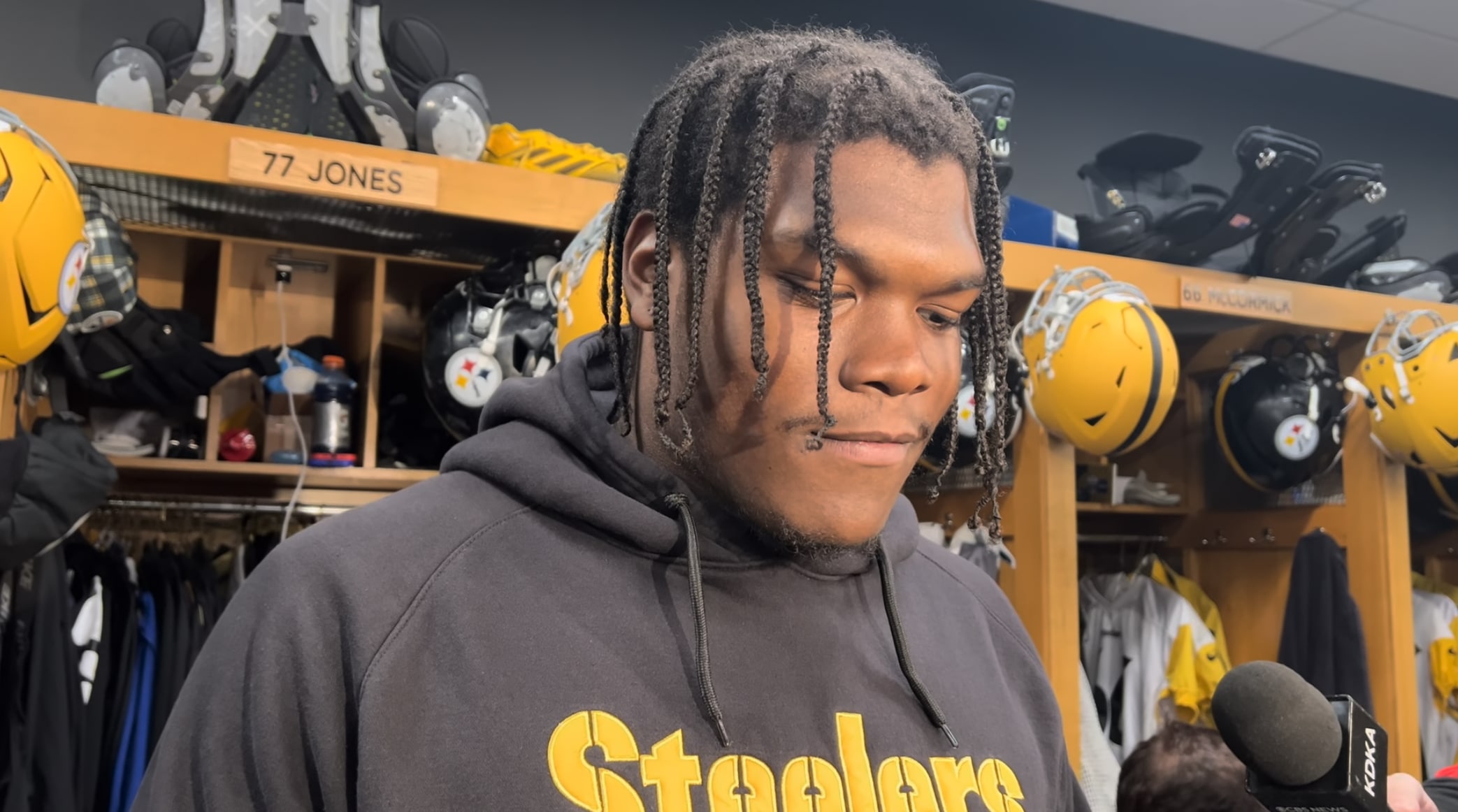
However, news broke of a troubling setback concerning Broderick Jones, sidelining his recovery from a neck injury and raising doubts about his availability for the 2026 season. This unforeseen circumstance drastically altered the Steelers’ draft strategy, making pick No. 21 one of the most pivotal selections of the entire draft.
Jones’ Injury Transforms Depth Concern Into Immediate Priority
For most of the offseason, the Steelers’ offensive line was projected as fairly stable—functional enough for the team to allocate its first-round pick elsewhere. However, Jones’ injury has now intensified the urgency surrounding this position.
With ambiguity regarding Jones’ return timeline, the Steelers must strategize with the assumption that they require a new starter. What previously appeared to be a manageable depth issue has escalated into a critical roster dilemma requiring immediate attention in the first round, depending on the availability of suitable talent.
Navigating the Back End of the First-Round Offensive Line Tier
Typically, sitting at pick 21 places a team outside the sweet spot for top-tier talent. This year presents a unique situation, as a select group of offensive linemen is projected to be drafted in the first round, with Pittsburgh positioned at the tail end of this elite cluster.
This context creates a strategic dilemma. Acting too soon may trigger a wave of offensive line selections, leaving Pittsburgh a step behind. Conversely, waiting could result in missing out on prime prospects entirely.
Insiders anticipate an influx of offensive linemen between picks 15 and 25, and the Steelers find themselves at the center of this dynamic, meaning their decision will not only influence their draft but also impact those selecting immediately afterward.
Potential Options: Fano, Freeling, Miller, and Ioane
The Steelers face several choices tied to specific prospects. Spencer Fano from Utah is known for his versatility and athleticism as a tackle. Meanwhile, Monroe Freeling from Georgia offers a high-upside developmental path. Blake Miller of Clemson presents reliability with his extensive experience, while Vega Ioane from Penn State stands out as the top-rated guard available.
Each option addresses a different aspect of the Steelers’ current challenges. Fano and Freeling provide potential long-term solutions for tackle depth. Miller delivers a more immediate sense of security, while Ioane could solidify the interior line, should the team decide to shift another player to tackle.
The absence of a clear-cut choice complicates their decision-making process, demanding they consider not just which player to select, but also the strategic direction for their offensive line.
Steelers’ Decision at 21 Will Influence the Entire Draft Board
There appears to be a significant drop-off in offensive line talent after the first round, and teams drafting behind Pittsburgh are acutely aware of it. If the Steelers opt for a guard at 21, it could trigger a rush on interior linemen. Should they select a tackle, other teams will scramble to secure the remaining top options.
This is how momentum shifts at the top of the draft often occurs—not through the front runners, but in strategic spots where one team’s decision disrupts the anticipated flow of selections. The Steelers find themselves in this critical role.
Navigating the Paradox: A Strong Line Confronts an Urgent Need
Despite the perception that the Steelers require adjustments, their offensive line had previously been rated as a top-three unit in pass-blocking efficiency and solidly ranked in the top ten overall for 2025. This draft is not about addressing glaring deficiencies; rather, it’s a response to unforeseen circumstances, injury risks, and future readiness.
This layer of complexity makes the decision even more daunting. When a team’s weaknesses are glaring, the draft choice is more straightforward. However, when a sustainable strength becomes tenuous due to injury, the focus shifts to risk assessment rather than merely filling a gap.
If the Steelers misjudge the situation by foregoing a lineman, they may find themselves scrambling once the draft progresses, left to explore secondary options. Opting for an ill-fitting player instead of maximizing value could also mean losing out on important contributions at other positions.
Initially, the Steelers did not expect to drive the narrative at pick 21. However, Broderick Jones’ injury and the characteristics of this draft class compel them to take on that role. While they may not be the premier team at that pick, they find themselves positioned to determine the subsequent moves made by other franchises. Correctly addressing their offensive line needs could solidify this essential unit for years to come, while a misstep could mean grappling with the same issues in the future, albeit with diminished options.