





The ink is already drying on several high-profile contracts as the 2026 NFL Draft class transitions from college stars to professional employees. With rookie minicamps kicking off over the first two weekends of May, teams are moving with unprecedented speed to secure their newest assets. If recent history is a guide, we can expect nearly three-quarters of the entire draft class to be officially signed before the end of the month.
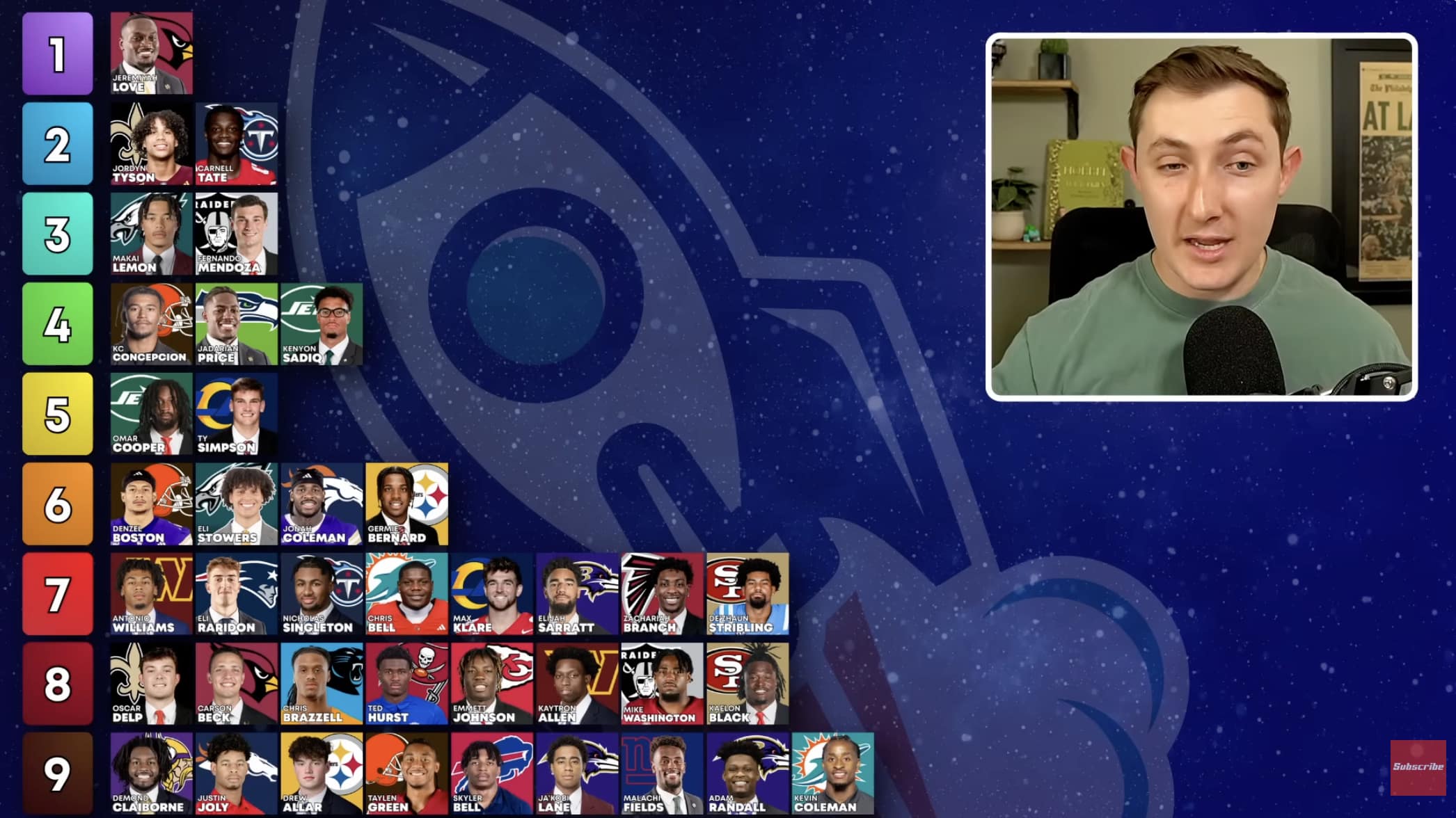
The Philadelphia Eagles and Baltimore Ravens have already set the pace. Philadelphia locked in Makai Lemon (20th overall) to a fully guaranteed $20.8 million deal, while Baltimore secured Vega Ioane (14th overall) with a package exceeding $24.2 million. This rapid-fire signing period is a stark contrast to the month-long holdouts that once defined the pre-2011 NFL landscape.
A closer look at the projected financials for the top of the 2026 class reveals the massive investments being made:
| Pick | Name | Team | 2026 Cap Number | Signing Bonus | 4-Year Total |
|---|---|---|---|---|---|
| 1 | Fernando Mendoza | Raiders | $10,412,836 | $38,111,344 | $57,270,598 |
| 2 | David Bailey | Jets | $9,940,859 | $36,223,436 | $54,674,724 |
| 3 | Jeremiyah Love | Cardinals | $9,640,512 | $35,022,048 | $53,022,816 |
| 4 | Carnell Tate | Titans | $9,297,257 | $33,649,028 | $51,134,913 |
| 5 | Arvell Reese | Giants | $8,696,557 | $31,246,228 | $47,831,063 |
| 6 | Mansoor Delane | Chiefs | $7,623,884 | $26,955,536 | $41,931,362 |
| 7 | Sonny Styles | Commanders | $6,765,744 | $23,552,976 | $37,211,592 |
| 8 | Jordyn Tyson | Saints | $5,907,604 | $20,090,416 | $32,491,822 |
| 9 | Spencer Fano | Browns | $5,864,696 | $19,918,784 | $32,255,828 |
| 10 | Francis Mauigoa | Giants | $5,628,708 | $18,974,832 | $30,957,894 |
| 11 | Caleb Downs | Cowboys | $5,263,998 | $17,515,992 | $28,951,989 |
| 13 | Ty Simpson | Rams | $4,620,392 | $14,941,568 | $25,412,156 |
| 16 | Kenyon Sadiq | Jets | $4,062,061 | $12,708,244 | $22,341,335 |
| 25 | Dillon Thiemann | Bears | $3,547,720 | $10,650,880 | $19,512,460 |
| 28 | Caleb Lomu | Patriots | $3,440,450 | $10,221,800 | $18,922,475 |
| 32 | Jardarian Price | Seahawks | $3,051,590 | $8,686,360 | $16,783,745 |
How the rookie wage scale operates
The current structure of rookie compensation is a byproduct of the 2011 Collective Bargaining Agreement, which aimed to curb the skyrocketing costs of unproven talent. Before this change, the top overall pick could command a deal that crippled a franchise’s salary cap. For context, Sam Bradford’s 2010 contract as the No. 1 pick featured $50 million in guarantees—a figure that has only recently been surpassed by top picks under the current system.
The rookie wage scale acts as a “cap within a cap.” It establishes strict parameters for each draft slot, virtually eliminating the wild negotiations of the past. All drafted rookies sign four-year contracts, with their total value largely determined by the league’s overall salary cap growth. For the 2026 class, signing bonuses have surged by 18.51%, reflecting the healthy financial state of the NFL.
One of the most rigid rules involves the “25% Rule,” which limits how much a player’s cap hit can increase year-over-year. Because the first-year minimum base salary is fixed ($885,000 for 2026), most of the negotiation—and the bulk of the money—is funneled into the signing bonus. Furthermore, these deals are ironclad for three years; a player like Cam Ward cannot even discuss a contract extension until January 2028.
The fifth-year option remains a critical tool for teams holding first-round picks. This must be exercised after the player’s third season and is now fully guaranteed upon being picked up. Interestingly, the value of this option is no longer just about draft position. It’s now tiered based on performance. For instance, a player who makes multiple Pro Bowls will see their fifth-year salary jump to the franchise tag level, rewarding early career excellence with immediate financial security.
Negotiable items
While the total dollar amounts are largely set in stone, agents and front offices still spar over several key “preference” items. The most significant of these is the payment schedule of the signing bonus. In an era where “money now” is worth more than “money later,” agents push for lump-sum payments rather than installments.
Historically, the first overall pick (like Fernando Mendoza this year) almost always receives their signing bonus in one lump sum. However, as you move down the draft board, teams become more reluctant. The New York Jets, for example, have a history of spreading these payments out, which could lead to minor friction with second-overall pick David Bailey.
Another major battleground is the “offset clause.” This clause allows a team to recoup guaranteed money if they cut a player and that player signs with a new team. Agents loathe offsets because they prevent “double-dipping”—receiving two full salaries at once. While most teams insist on offsets, a few outliers like the Rams and Jaguars have occasionally conceded this point, giving their picks a rare form of financial leverage.
Finally, the specific language regarding the “voiding” of guarantees has become a sticking point. Teams want the right to void guarantees if a player is suspended or ejected for on-field conduct. High-profile holdouts, such as Roquan Smith’s in 2018 or Shemar Stewart’s brief delay in 2025, usually revolve around finding a middle ground on how many games or what type of behavior triggers these financial penalties.
The 2026 rookie class represents a new era of financial efficiency in the NFL. By standardizing pay while still rewarding Pro Bowl-level play through escalators and tiered fifth-year options, the league has created a system that gets players into camp on time while ensuring the top stars are eventually paid their market value. For the Raiders, Jets, and the rest of the league, the focus now shifts from the spreadsheet to the practice field.