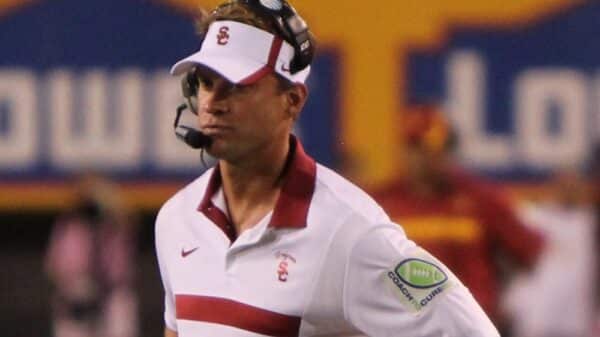




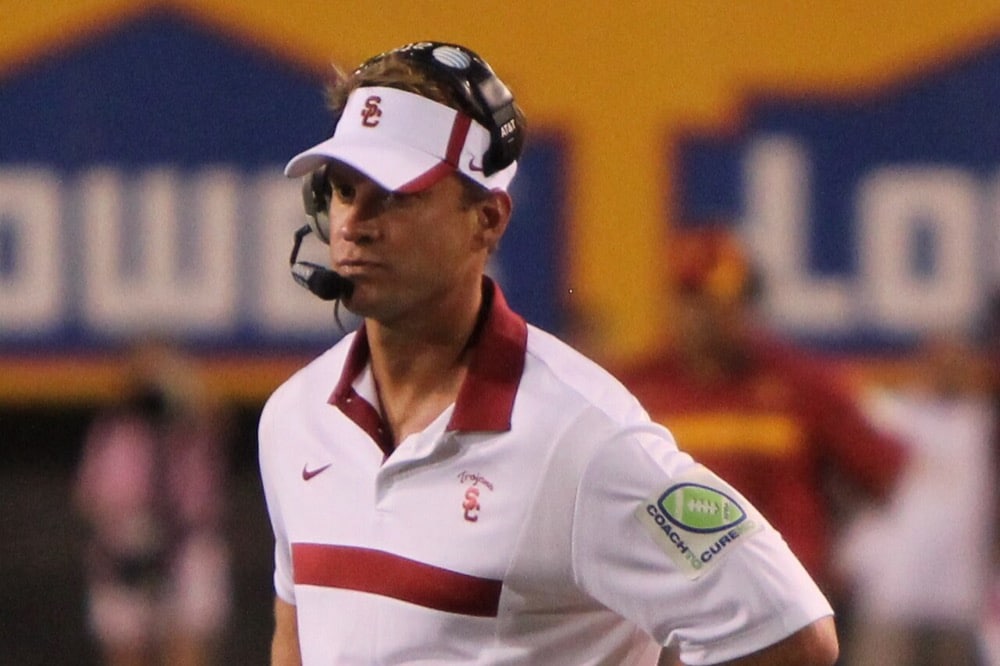
Lane Kiffin is still grappling, both mentally and physically, with LSU’s devastating Saturday night defeat against Texas. The head coach admits he has yet to fully process the visual of Raleek Brown crossing the goal line completely uncovered on Arch Manning’s game-winning touchdown pass.
Following a massive wave of offseason hype, optimism, and substantial financial backing, the Tigers sit at 6-4 through 10 contests. Few coaches enter their debut season carrying the immense level of scrutiny that Kiffin faces, and that heavy burden was acutely felt as Brown strolled into the end zone unhindered.
“Not in a negative way,” Kiffin shared on Monday. “I think we all understand that LSU football wins and losses carry immense weight for everyone throughout the state. You definitely feel that pressure.
“When that ball crossed the plane, my immediate thoughts went straight to our players. They poured an incredible amount of work into the offseason, and all these guys chose to come here. I just kept thinking, ‘Is it really going to end like this? We aren’t going to cover the guy, and he is just going to walk right into the end zone.’
“Then you think about our supporters and the incredible energy they brought to the stadium, having the game right there within reach, only for it to end this way. I felt that deeply, though not in a malicious sense. I was simply heartbroken that we failed to secure a victory for them.”
That blown coverage remained at the forefront of Kiffin’s thoughts, with the coach noting that the pivotal defensive breakdown has repeatedly disrupted his sleep all week.
Reliving the Longhorns Defeat
LSU supporters have likely replayed that agonizing finish on a loop since the final whistle, and it appears the coaching staff shares that exact experience. During his Monday media session, Kiffin immediately zeroed in on the recurring nightmares he has suffered regarding the late-game collapse against Texas.
“I literally wake up every single hour over the last couple of nights plagued by a nightmare about the game’s final play,” Kiffin explained. “Every time I jolt awake, I replay the failure to cover someone to seal the loss to Texas. I wake up, realize it actually happened, fall back asleep for an hour, and wake up to the exact same reality.”
In his restless state, Kiffin has even attempted to rewrite the outcome.
While discussing his decision to hold onto his final timeout rather than calling it before the Longhorns snapped the ball, Kiffin tied the moment back to his recurring bad dream, where he desperately tries to stop play before the snap occurs.
“Everything happened in an instant,” Kiffin noted. “I asked, ‘Do we want to use it?’ I am not shifting blame anywhere. The response was, ‘No, we’re good.’ That is the exact reason I walked all the way down the sideline, because I wanted to be ready in case we disliked the look or needed a reset. I am not pointing fingers, but that is precisely why I was positioned down there.
“That forms a major part of the nightmare. In my sleep, I keep watching myself call that timeout.”
In reality, the timeout remained unused, leaving Kiffin with lasting second-thoughts. Yet, while the final defensive lapse naturally commands the spotlight, the contest slipped away during crucial sequences earlier in the matchup.
Quarterback Sam Leavitt’s Struggles
Failing to capitalize on three separate red-zone trips provides a direct pathway to defeat, which is precisely what plagued LSU on Saturday night. Two of those stalled drives concluded with interceptions thrown by Sam Leavitt, bringing his total to three picks for the evening.
Leavitt undeniably shares a significant portion of the blame for the offensive output against Texas, and Kiffin readily admitted that his signal-caller made severe miscalculations in the passing game. Kiffin revealed that he and his quarterback had specifically discussed the necessity of valuing the football in a tightly contested environment.
“He and I had a conversation on Friday about how this matchup could easily turn into a defensive battle,” Kiffin said. “… I knew their defensive unit was exceptional. I stressed to him that even if I dialed back the aggression in certain play-calling situations, he had to take care of the football if the game unfolded that way.”
Interestingly, Kiffin observed that the early interceptions caused Leavitt to become overly cautious, leading to missed opportunities down the stretch.
“Once you accumulate those errors, you start to tighten up, and there were sequences in the fourth quarter where he was supposed to attack certain areas and make plays, but the lingering fear of throwing a fourth interception held him back,” Kiffin added. “It can spiral on you quickly.”
For LSU to conclude the 2026 campaign on a positive note, Leavitt must drastically reduce turnovers during high-pressure scenarios. That corrective process begins immediately this weekend against a formidable Tennessee defense known for suffocating opposing offenses once they cross into scoring territory.
Ultimately, the lingering frustration from the Texas loss highlights the razor-thin margins in high-stakes college football, where missed defensive assignments and red-zone turnovers can instantly derail a promising season and leave a coaching staff searching for answers.